Saturday, April 18, 2020

Real top 10 Man-Made Black Holes on Earth

The astronauts, who first saw the Earth from space, enthusiastically respond to the unique colors and patterns that dotted the planet. Green valleys, flower plantations, golden deserts, mountain ranges, as well as deep canyons. For millions of years, nature has created and changed landscapes that people in all corners of the world admire.

But for some time now man began to interfere in this creative process. Sometimes well-designed projects by scientists give life to drylands, and agricultural activity develops in just a few years. But also without stopping there is an extraction of ores and precious metals, as a result of which many "unplanned" holes have formed on earth.  We suggest you take a small virtual trip to these places.

01. Ekati Diamond Mine
10 Man-Made Black Holes on Earth

Source | Therichest

Ekati Diamond MineThe development of the quarry was started in 1998. In 1998-2009, 40 million carats of diamonds were mined from the quarries of the mine. Currently, work is underway. The exact depth of Ekati is unknown.

02. The Diavik Diamond Mine | Northwest Territories, Canada
10 Man-Made Black Holes on Earth
Source | Menworld

The Diavik Diamond Mine | Northwest Territories, Canada, The quarry was opened in 2003. About 1.5 tons of diamonds per year are mined here. Since 2010, the mine has been underground mining. The exact depth is unknown.

03. The Big Hole, South Africa
10 Man-Made Black Holes on Earth
Source | Menworld

The Big Hole, Open Mine, Kimberley Mine or Tim Kuilmine, South Africa. The quarry was excavated between 1866-1914. using picks and shovels. During this time, 2,722 kg of diamonds were mined here and approximately 22.5 million tons of soil were recovered to the surface. Quarry area - 17 hectares. Its perimeter is 1.6 km and its width is 463 m. Initially, the hole depth was 240 m, but later it was filled up with waste rock to a depth of 215 m. At present, the bottom is flooded with water.

04. Kalguri Super Pit, Australia 
10 Man-Made Black Holes on Earth
Source | kalgoorlietourism

The Fimiston Open Pit, colloquially known as the Super Pit, Australia's, the largest open-pit opened in 1989. Over the years, the largest gold quarry has grown to 3.5 km in length. The distance from the sides of the quarry to the bottom is 360 m.

05. Grasberg, Indonesia
10 Man-Made Black Holes on Earth
Source | Investvine

The Grasberg Mine is the largest gold mine and the second-largest copper mine in the world. The highest quarry in the world, Grasberg is located at an altitude of 4,285 m above sea level. Development began in 1973, Indonesia. At the moment, its depth is 480 m.

06. Mir mine, Russia
10 Man-Made Black Holes on Earth
Source | Menworld

Mir mine, The diamond field was discovered in 1955, until 2001, the development was conducted in an open way. In 2009, mining began in an underground mine. The quarry has a depth of 525 m, and its diameter is 1.2 km.

07. Udachnaya pipe, Russia
10 Man-Made Black Holes on Earth
Source | Menworld

Udachnaya pipe, Russia, Diamond quarry in the north of Yakutia has located 20 km from the Arctic Circle. Since 1982, it was developed in an open way, and since 2014, work has been going on in an underground mine. Quarry depth - 585 m.

08. Escondida, Chile
10 Man-Made Black Holes on Earth
Source | Menworld

Escondida is a copper mine, the open-pit mine is located in the north of the Atacama Desert. Work in it began in 1990. The mine has two quarries. The depth of the deepest of them is 650 m.

09. Bingham Canyon, USA
10 Man-Made Black Holes on Earth
 Source | Usa-mama

Bingham Canyon, USACopper ore was found here in 1850, and 13 years later, it a development. As of 2008, the depth of the quarry reached 1.2 km, a width of 4 km, and an area of ​​1,900 acres. About 450 thousand tons of rock are extracted daily from the quarry.

10. Chuquicamata / Chukikamata, Chile
10 Man-Made Black Holes on Earth
Source | Menworld


Chuquicamata / Chukikamata, Chile, is the largest open-pit mine in the world where copper ore is mined. The field has been developed since 1915. The quarry is located in the central Andes at an altitude of 2840 m. The depth of the quarry is 850 m.

Yehliu Geopark in Wanli, Taiwan

Yehliu Geopark in Wanli, Taiwan,  is truly unique because the rock layers near the seashore contain substantial quantities of limestone, which are subject to sea erosion, weathering, and earth movements, thus making the 1,700 meter-long peninsula almost lunar-like in many ways. The wild-looking landscape leaves little to the imagination. It’s easy to imagine what life could be like on another planet. The area is studded with seawater-eroded holes teeming with sea-life, as well as unusual rock formations, which make the surrounding environment rich in ecological resources. Sun, wind, rain, waves and strong northeastern typhoons all make a major impact on this narrow strip of land.

Yehliu Geo-Park in Wanli, Taiwan,  is truly unique because the rock layers near the seashore contain substantial quantities of limestone, which are subject to sea erosion, weathering and earth movements, thus making the 1,700 meter-long peninsula almost lunar-like in many ways.

The coastal region of the Yehliu peninsula is mainly made up of sedimentary rocks. Over time, the constant drumming of the ocean against the shore, erosion from the wind and exposure to the atmosphere, not to mention the remains of crustaceans like sand dollars and sea urchins, has chiseled the land away into all sorts of shapes. The park's unique formations resemble giant sandals, rows of square boulders neatly poking out of the surf and stones covered in potholes. However, perhaps the park's most iconic objects are the mushroom-like pedestal rocks, or “hoodoo rocks,” that dot the landscape. Hoodoo rocks are found all over the world, particularly in high, dry, rocky regions like the North American Badlands and the Colorado Plateau. These formations can stretch anywhere from four to five feet to hundreds of feet tall. They are often composed of soft sedimentary stone capped off with harder, less-eroded rock. But the rocks at Yehliu are a bit different from most. 

Yehliu Geo-Park in Wanli, Taiwan,  is truly unique because the rock layers near the seashore contain substantial quantities of limestone, which are subject to sea erosion, weathering and earth movements, thus making the 1,700 meter-long peninsula almost lunar-like in many ways.

Yehliu Geo-Park in Wanli, Taiwan,  is truly unique because the rock layers near the seashore contain substantial quantities of limestone, which are subject to sea erosion, weathering and earth movements, thus making the 1,700 meter-long peninsula almost lunar-like in many ways.

Yehliu Geo-Park in Wanli, Taiwan,  is truly unique because the rock layers near the seashore contain substantial quantities of limestone, which are subject to sea erosion, weathering and earth movements, thus making the 1,700 meter-long peninsula almost lunar-like in many ways.

Yehliu Geo-Park in Wanli, Taiwan,  is truly unique because the rock layers near the seashore contain substantial quantities of limestone, which are subject to sea erosion, weathering and earth movements, thus making the 1,700 meter-long peninsula almost lunar-like in many ways.

Yehliu Geo-Park in Wanli, Taiwan,  is truly unique because the rock layers near the seashore contain substantial quantities of limestone, which are subject to sea erosion, weathering and earth movements, thus making the 1,700 meter-long peninsula almost lunar-like in many ways.

Yehliu Geo-Park in Wanli, Taiwan,  is truly unique because the rock layers near the seashore contain substantial quantities of limestone, which are subject to sea erosion, weathering and earth movements, thus making the 1,700 meter-long peninsula almost lunar-like in many ways.

Yehliu Geo-Park in Wanli, Taiwan,  is truly unique because the rock layers near the seashore contain substantial quantities of limestone, which are subject to sea erosion, weathering and earth movements, thus making the 1,700 meter-long peninsula almost lunar-like in many ways.

Yehliu Geo-Park in Wanli, Taiwan,  is truly unique because the rock layers near the seashore contain substantial quantities of limestone, which are subject to sea erosion, weathering and earth movements, thus making the 1,700 meter-long peninsula almost lunar-like in many ways.

Yehliu Geo-Park in Wanli, Taiwan,  is truly unique because the rock layers near the seashore contain substantial quantities of limestone, which are subject to sea erosion, weathering and earth movements, thus making the 1,700 meter-long peninsula almost lunar-like in many ways.

Amazing Chinese Cliff lays egg-shaped stones in every 30 years


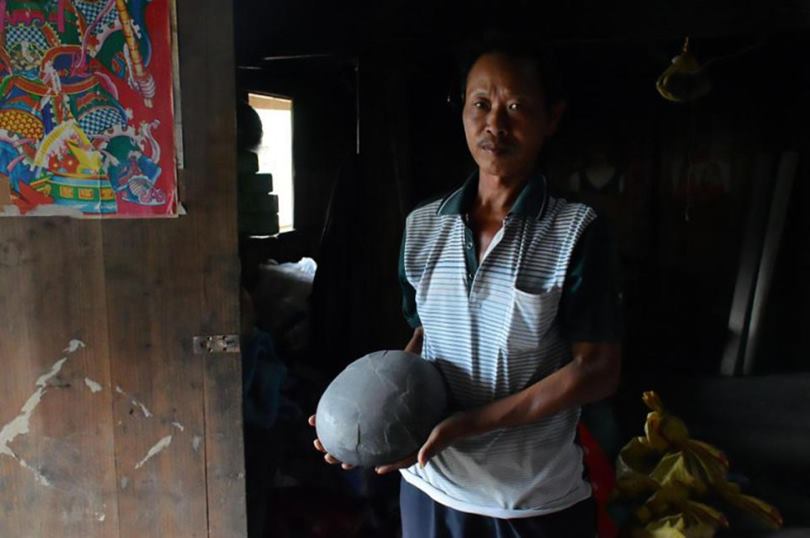
Local people in the southwestern Chinese Autonomous Region of Guizhou Province in southwestern China were surprised to find the smooth and rounded egg eggs protruding over the cliffs and falling to the ground afterward. The cliff is named Chan D Ya, meaning "cliff to lay eggs" in Chinese.


The southwestern Chinese Autonomous Region of Guizhou Province in southwestern China were surprised to find the smooth and rounded egg eggs protruding over the cliffs and falling to the ground afterwards. The cliff is named Chan D Ya, meaning "cliff to lay eggs" in Chinese.
The formation is hollow and resembles bubbles and eggs. Photo: Asiawire

Geologists may have uncovered the secret of the Chan D Ya cliff, which rmed 500 million years ago in the Cambrian period, and a certain part of it consists of calcareous rocks. Scientists believe that the time difference that is required to destroy each type of rock, and led to the formation of "stone eggs." Sept. 12 reported.

The southwestern Chinese Autonomous Region of Guizhou Province in southwestern China were surprised to find the smooth and rounded egg eggs protruding over the cliffs and falling to the ground afterwards. The cliff is named Chan D Ya, meaning "cliff to lay eggs" in Chinese.
People bring rock eggs home because they believe they bring good luck. Photo:  Asiawire

Experts say the egg-shaped shape of the stones is the result of the difference in the erosion of each stone. But they still can not explain how smoothly rounded stones are, or why the half-billion-year-old geologic site is composed of limestone. Chan Dan Ya – Mandarin for ‘egg-producing cliff’ is only 19ft high and 65ft long. Many villagers take the eggs home because they believe they bring good luck and blessings. That is why only about 70 stones are preserved.

The southwestern Chinese Autonomous Region of Guizhou Province in southwestern China were surprised to find the smooth and rounded egg eggs protruding over the cliffs and falling to the ground afterwards. The cliff is named Chan D Ya, meaning "cliff to lay eggs" in Chinese.

 Local tourism director Yang Shengjia says such formations are considered good luck premises and those who can get or take the 'eggs' from the stone or even from the ground, as they fall with a certain frequency over the years and carry to their house, they get an amulet. The 'eggs' arise in a time-spaced period, it is about 30 years between the appearance of new oval forms on the cliff. 

The southwestern Chinese Autonomous Region of Guizhou Province in southwestern China were surprised to find the smooth and rounded egg eggs protruding over the cliffs and falling to the ground afterwards. The cliff is named Chan D Ya, meaning "cliff to lay eggs" in Chinese.


The Dragon Bridge

Lucky Knot is called the steel footbridge in the Chinese city of Changsha, which is shaped like a dragon or a snake, with a length of 185 meters and a height of 24 meters.

Lucky Knot Footbridge of Changsha | The Dragon Bridge → Completed in 2013 by the NEXT architect's studio and opened to the public three years later, it is considered to be one of the most impressive bridges around the world.


This bridge is a key project for the development of the area and is designed with recreational, ecological and tourist activities.

This bridge is a key project for the development of the area and is designed with recreational, ecological and tourist activities.

It connects multiple levels to different heights, such as the river, the road, the park, and there are interconnections that resemble knotted knots.

The final shape of the bridge is inspired by the shape of the Mobius ring, as well as by the Chinese art of knotting.

In ancient decorative Chinese folk art, knot symbolizes luck and prosperity," says John van de Water, a NEXT architects' associate in Beijing. The bridge owes its fantastic appearance to the combination of tradition and innovation, "he points out.

Lucky Knot is more than a bridge and a connection between the two banks of the river. Its success determines the communication of cultures among themselves, and the merging of history, technology, art, innovation, architecture and spectacle, "adds Jiang Xiaofei.

This bridge connects, illuminates and entertains. It offers stunning views of the river, Meixi Lake, Changsha Town, and the surrounding mountain range.

The Dragon Bridge, Lucky Knot

NEXT architects holds offices in Amsterdam and Beijing

Lucky Knot bridge over the Dragon King Harbour River in the New Lake District of Changsha, China

The Lucky Knot bridge was designed collaboratively by the Chinese and Dutch arms of NEXT Architects

The Lucky Knot bridge comprises three undulating, intertwined steel walkways

NEXT Architects, which designed the bridge, aimed in part for it to be a new public space and attraction for what is a developing area. Its was inspired by the continuously flowing Mobius ring and by Chinese knotting art

The Lucky Knot is more than a bridge and a connection between two river banks," explains Beijing partner at NEXT architects Jiang Xiaofei.

the Dragon King Harbour River, the Meixi Lake, Changsha and the nearby mountains. It will also boast an LED lightshow that will help to position the bridge as an attraction.

Source — Newatlas 

Unusual hedge mazes in the world

One of the most memorable scenes of the movie “Three in a boat, not counting the dog” is the scene in which the main characters enter the maze. In our review, we will focus on the most unusual and beautiful hedge mazes around the world.

The 9 most unusual hedge mazes in the world


Longleat (Longleat, Wiltshire, England)

Composed of over 16,000 English yews, the Longleat Hedge Maze is one of the longest in the world. The length of its corridors is about 2.7 kilometers, and the total area of ​​the maze is 0.6 hectares. Since the 16th century, this territory belonged to the Marques of Bat, who in 1975 allocated part of the territory of their estate under a huge hedge maze. Later, the first safari park and three smaller labyrinth gardens were built on the estate.

Mason (Parma, Italy)


The largest maze in the world is the "Mason", which was built in the Italian city, famous for its parmesan cheese. Curiously, the labyrinth was created as a result of a dispute between Italian publisher Franco Maria Ricci and writer Jorge Luis Borges. When Ricci announced that he wanted to build the world's largest maze, Borges replied that this was impossible.

The star-shaped labyrinth, which opened in May 2015, was built using 200,000 bamboo plants, and its territory is as much as 8 hectares. Seventy-year-old Ricci used a fast-growing bamboo instead of traditional trees and shrubs to see a ready-made labyrinth even before his death.

Andrassy Castle (Tisobod, Hungary)

Located along the Tisza River near the Hungarian-Slovak border, the hedge labyrinth of boxwood and yew in the Andrassy Castle, according to the architect's idea from above, was supposed to resemble a huge squid. The castle itself was built in the 19th century for Count Andrássy.

Pineapple Maze (Wahayawa, Hawaii)

This permanent hedge maze, which was the largest in the world before the Mason, is located on the Dole pineapple plantation in Hawaii. It consists of 14,000 pineapple bushes, which are fragrant along the entire four-kilometer path through the maze.

Labyrinth of Villa Pisani (Stra, Italy)

It is often said that, despite its small size, the labyrinth in the territory of Villa Pisani is the most difficult in the world. Guides like to say that in 1807, walking along the winding paths of the maze, Napoleon got lost in it. Whether it is a bike or not is unknown, but the labyrinth, built in 1720 by a rich doge near his villa, is one of the most beautiful in the world.

Corn Maze at Richardson Farm (Spring Grove, Illinois)

On the corn field of 13 hectares each year, the so-called corn maze is created. Moreover, its design changes every year - for example, in 2013 the labyrinth looked like a portrait of the Beatles on top, in 2014 it looked like the US flag, and in 2015 the labyrinth design was dedicated to the Chicago Blackhawks victory in the NHL.

Labyrinth of the world (Castlewellan, Ireland)

A 1 hectare peace labyrinth was planted in 2000 to celebrate the signing of the Good Friday Agreement (Northern Ireland Political Conflict Resolution Agreement). It consists of two parts, and to go through the maze completely, you need to cross both. There is a tradition: one who has reached the center of the labyrinth calls the Peace Bell located there.

Ashcombe Maze (Victoria, Australia)

More than a thousand Monterey cypresses were used to build one of the oldest plant labyrinths in the Southern Hemisphere. Since the 1970s, cypresses have been carefully trimmed twice a year, with each haircut session lasting a whole month. Visitors need to go through two halves of the maze, each of which has its own unique design. And next to the cypress labyrinth is another labyrinth that was created from more than 4,000 lavender bushes.

Hampton Court Palace (Surrey, UK)

By order of King William III, in 1700, the oldest hedge maze in the UK was built near the Hampton Court Palace. Initially, it was made of hornbeam, but then the trees were replaced by holly and yew. Hampton Court Labyrinth is known as one of the most complex in the world.